
Horse Bits Explained: Snaffles, Curbs, Mouthpieces & Bitless Options

Bits and bitless equipment work in different ways, and no single design is automatically mild, harsh, beginner-safe, or appropriate for every horse. This guide explains direct-pressure snaffles, leverage-based curb bits, common mouthpiece designs, bitless options, fit, and what to check when something seems wrong.
What You Need to Know
- A snaffle applies direct rein pressure without a leverage arm, while a curb bit uses shanks and a curb strap or chain to create leverage. A jointed mouthpiece does not automatically make a bit a snaffle.
- Bit action depends on more than one feature. Mouthpiece shape and thickness, cheek or shank design, fit, curb adjustment, rein tension, and rider hands can all affect where and how pressure is applied.
- Thicker mouthpieces generally spread pressure over a larger area, but they are not automatically more comfortable if the horse has limited space in the mouth.
- Bitless does not automatically mean mild. Sidepulls, bosals, and mechanical hackamores act differently, and leverage-based bitless equipment still requires knowledgeable fitting and handling.
- Sudden resistance, head tossing, difficulty turning, or other changes in contact can have several possible causes, including dental discomfort, fit, rider influence, or other pain. They should be investigated rather than diagnosed from one symptom alone.
- Competition legality varies by discipline, organization, class, and year. Check the current rulebook rather than relying on an older equipment guide.
How Bits and Bitless Equipment Apply Pressure
The most useful way to compare rein-control equipment is by how rein tension is transferred to the horse. Some designs apply direct pressure, while others use leverage. Bitless equipment may use direct pressure, leverage, or a combination depending on its construction.
01
Direct-pressure snaffles
A true snaffle has no leverage arm. Rein pressure is transferred directly through the bit to areas such as the lips, tongue, and bars of the mouth. Cheek design can influence stability and lateral guidance, but the defining feature is the absence of leverage.
02
Curb bits and leverage
A curb bit uses shanks and a curb strap or chain to create leverage. The amount and timing of that leverage depend on the relationship between the upper and lower shank lengths, mouthpiece design, curb adjustment, and rein tension.
03
Bitless options
Sidepulls and bosal-style equipment use pressure on the face without a mouthpiece, while mechanical hackamores use leverage through their shanks. Bitless designs therefore should not be treated as one mechanical category or assumed to be automatically mild.
Remember: A jointed mouthpiece does not make a bit a snaffle. The cheek and rein-attachment design determine whether the bit acts directly or through leverage.
Snaffle Bits: Direct Pressure
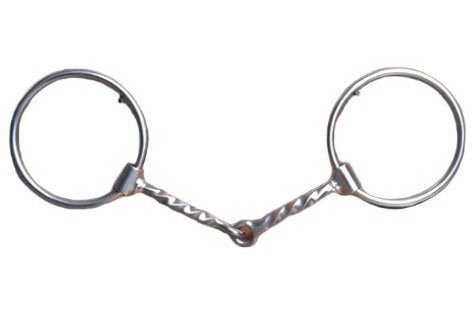
A snaffle applies direct rein pressure because the rein attaches without a leverage arm. Depending on the cheek design and mouthpiece, pressure may be felt at the lips, tongue, bars, and sides of the mouth. Loose-ring, eggbutt, D-ring, and full-cheek designs are all examples of snaffle-style cheeks when the rein acts without leverage.
Snaffles are widely used in training and many riding disciplines because direct rein pressure can provide clear lateral guidance. That does not make every snaffle automatically mild. Mouthpiece diameter, twists, joints, fit, and rider contact all influence how pressure is delivered. Smaller-diameter twisted mouthpieces concentrate pressure more intensely than smoother, broader designs.
Consider a snaffle if…
You want a direct-pressure setup appropriate for the horse’s training, anatomy, and discipline, and the chosen mouthpiece and cheek design suit the horse comfortably. Evaluate the whole bit rather than assuming “snaffle” automatically means gentle.
Curb Bits: Leverage
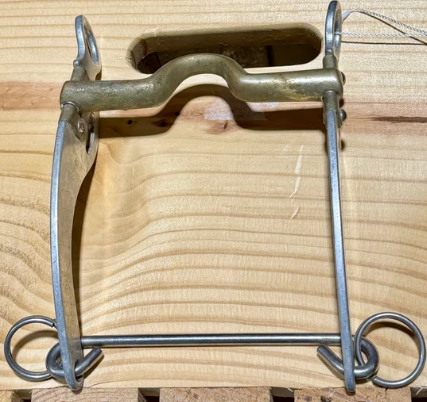
Curb bits use shanks and a curb strap or chain to create leverage. Rein pressure can influence the mouth, chin groove, and poll depending on the bit’s design and adjustment. Unlike a snaffle, the rein does not act on the mouthpiece in a simple one-to-one direct line.
Leverage is not determined by total shank length alone. The relationship between the upper shank, or purchase, and the lower shank affects the leverage ratio, while mouthpiece shape, curb adjustment, shank movement, and rider contact influence how the bit acts in practice.
Consider a curb bit if…
The horse, rider, training level, and discipline call for a leverage-based setup and the rider understands how the shanks, mouthpiece, curb strap or chain, and rein contact interact. Do not choose a curb solely because it is described as stronger or because a horse seems difficult to stop.
Curb adjustment is design-specific. Avoid relying on one universal “two fingers” or fixed engagement-angle rule. Follow the bit manufacturer’s guidance, qualified fitting advice, and current competition rules when applicable.

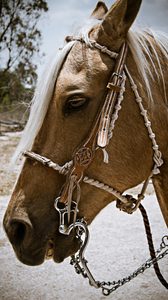
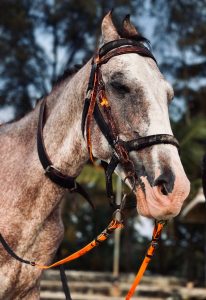

Bitless Options: Sidepulls, Bosals & Mechanical Hackamores
Bitless equipment removes the mouthpiece, but it does not remove pressure. Different designs act on the nose, jaw, chin, or poll in different ways. Some use direct pressure, while others use leverage, so “bitless” should not be treated as a single mechanical category or assumed to be automatically mild.
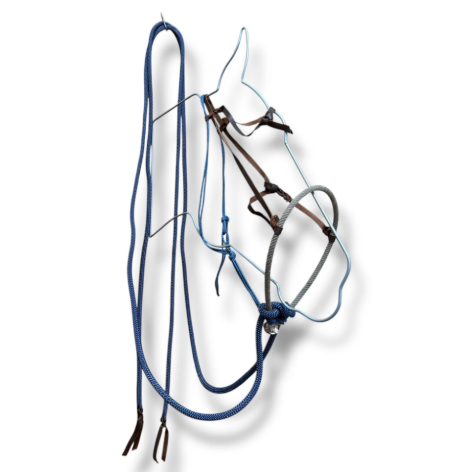
Sidepulls and Bosals
Sidepulls and bosal-style hackamores apply pressure to the horse’s face without a mouthpiece. A bosal surrounds the bridge of the nose and lower jaw, and is traditionally used in some stock-seat training systems. These designs can provide more direct lateral guidance than leverage-based mechanical hackamores, but correct fit, material, rider timing, and training still matter.
Consider a direct-action bitless setup if…
You want to work without a mouthpiece and the horse, rider, training system, and discipline suit that approach. Fit should be evaluated for the specific design rather than assuming all sidepulls or bosals position and act the same way.
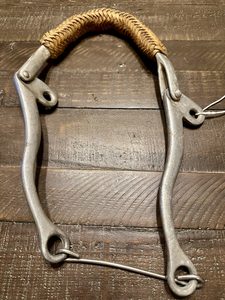
Mechanical Hackamores
Mechanical hackamores use hinged sidepieces or shanks and a curb strap to create leverage around the nose and chin. They are commonly used to reinforce stopping or slowing and they provide less lateral guidance than snaffles. They are generally more appropriate for horses with previous training than as a beginning bridle.
Consider a mechanical hackamore if…
You understand how its leverage system works, the horse is already trained to respond appropriately, and the design is fitted so pressure is applied to the intended areas of the face without interfering with the nostrils or soft lower nasal structures.
Fit matters: Facial equipment should be fitted to the individual horse and positioned so it does not interfere with the nostrils or soft lower nasal structures.
Remember: Bitless does not mean pressure-free. Compare how the equipment acts, where pressure is applied, and whether the horse and rider are trained for that system.
Mouthpiece Design: What Actually Changes
Mouthpiece design changes how pressure is distributed across the tongue, bars, lips, and sometimes the roof of the mouth. Shape, diameter, joints, ports, texture, and material all matter, and their effects depend on the horse’s mouth anatomy, the rest of the bit, and the rider’s hands. A feature that reduces pressure in one area may increase it somewhere else.
| Design | What changes | Where pressure may shift | What to check |
|---|---|---|---|
| Solid / mullen-style | Stable, unjointed mouthpiece | More pressure can be carried across the tongue compared with jointed designs | Tongue thickness, palate space, curvature, and overall mouthpiece thickness |
| Single-jointed | One center joint allows the mouthpiece to fold and conform differently | Can reduce pressure through the center of the tongue while increasing pressure toward the bars and corners of the mouth | Joint shape, diameter, cheek design, and horse anatomy |
| Double-jointed / multi-jointed | Additional joints allow the mouthpiece to conform more around the tongue | Pressure distribution depends heavily on the center link and how the joints lie in the mouth | Center-link shape, length, orientation, and available tongue space |
| Ported | Raised center section changes tongue clearance and potential palate contact | Port height and width alter tongue relief and, in some designs, can introduce palate pressure | Port height, port width, mouth anatomy, curb action, and bit rotation |
| Twisted / textured | Reduces the area over which pressure is distributed | Can intensify pressure compared with a smooth mouthpiece of similar diameter | Diameter, degree of twist, rider hands, and intended use |
Solid and Mullen-Style Mouthpieces
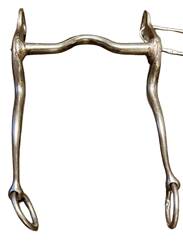
A solid mouthpiece does not have a center joint. Straight or gently curved designs create a stable feel, but that does not automatically make them milder. Straighter mouthpieces generally place more pressure across the tongue, while curved or jointed designs can shift more pressure toward the bars. The amount of available tongue and palate space matters when evaluating fit.
Jointed Mouthpieces
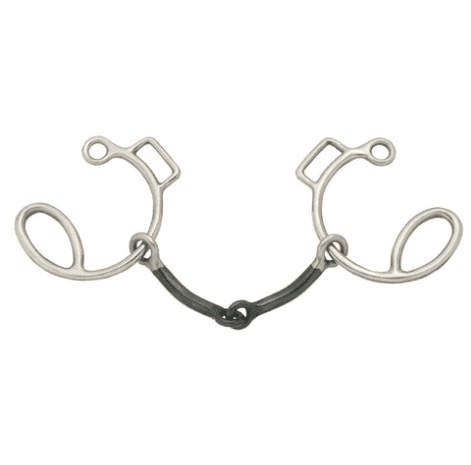
A single-jointed mouthpiece folds at one center hinge. A jointed mouthpiece can take some pressure off the center of the tongue when rein pressure is applied, shifting more pressure toward the bars and sides of the lips. Its effect also depends on mouthpiece diameter, cheek design, and the shape of the horse’s mouth.
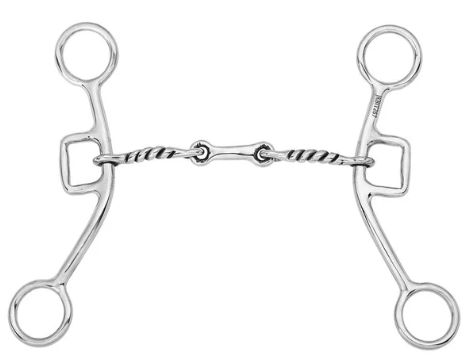
Double-jointed and multi-jointed designs conform differently around the tongue because they bend at additional points. The center link matters: its shape, length, and orientation affect how the mouthpiece sits and where pressure is concentrated. Terms such as “dog bone,” “French link,” or “lozenge” describe construction, not a guaranteed level of mildness.
Ports and Tongue Relief
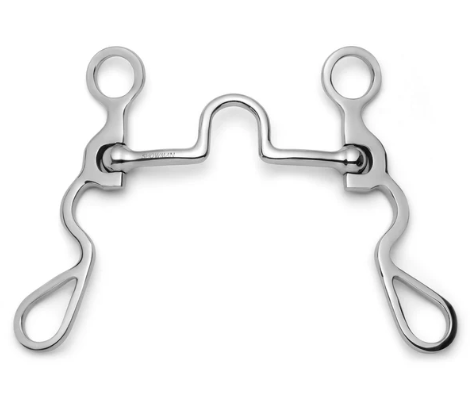
A port is a raised section in the center of a mouthpiece. Port height and width change how much room the tongue has and whether the mouthpiece can contact the roof of the mouth. A wider port can reduce pressure on the tongue, while taller designs can introduce palate pressure depending on the horse’s anatomy and how the bit rotates under rein tension.
Avoid simple port rankings: “Low,” “medium,” and “high” port labels do not by themselves tell you how a bit will feel. Port width, height, mouthpiece shape, shank action, curb adjustment, and the individual horse all matter.
Diameter and Surface Texture
A larger-diameter mouthpiece generally spreads pressure over a larger surface area, while a smaller diameter concentrates it more. That does not mean thicker is always more comfortable: a horse with a thick tongue or limited oral space may have less room for a bulky mouthpiece.
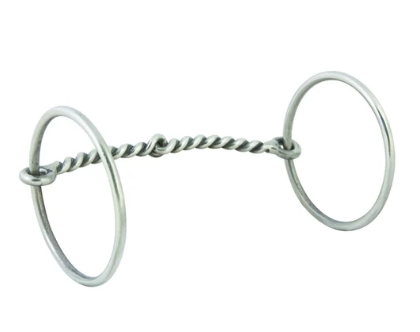
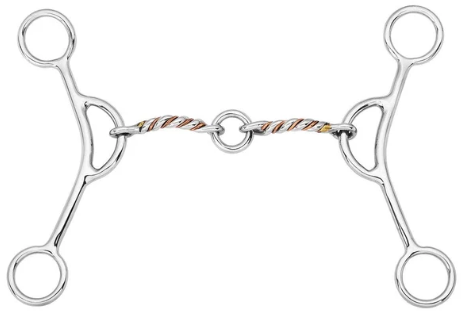
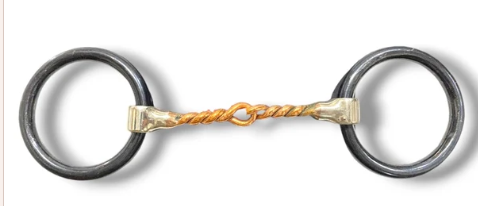
Twisted or otherwise textured mouthpieces reduce the contact area and can intensify pressure compared with smooth designs. Small-diameter wire twists greatly increase pressure intensity and are not intended as everyday-use bits.
Copper, Sweet Iron, and Movable Elements
Materials and movable components can change taste, texture, and how much a horse manipulates the mouthpiece. Copper is commonly incorporated because it may encourage salivation. Sweet iron is also widely used in bit construction. Rollers and similar movable parts give the horse something to move with the tongue, but claims that they reliably reduce anxiety, improve acceptance, or relax the jaw are stronger than the available sources support.
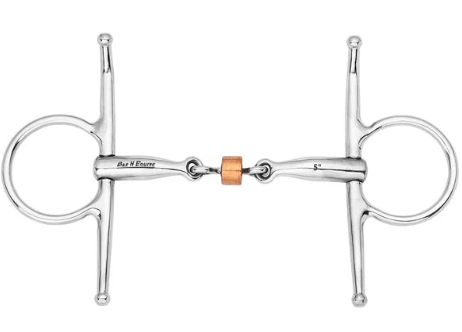
Remember: Mouthpiece features should be described by what they change mechanically, not by assuming one design is always “mild” and another is always “strong.”
How to Measure Bit Width
Bit size is usually based on the width of the mouthpiece, but measurement conventions can vary by manufacturer and cheek design. Start by measuring the horse’s mouth, then compare that measurement with the maker’s instructions for the specific bit you are considering.


- Measure the horse’s mouth.
Use a purpose-made bit measure or another smooth, safe measuring tool to estimate the width between the corners of the mouth. Avoid anything sharp, rough, brittle, or likely to break. - Check the manufacturer’s measurement method.
Manufacturers may measure between the inner edges of the cheeks, across the mouthpiece, or according to another stated convention. Use the product’s actual measurement instructions rather than relying only on labels such as pony, cob, or full. - Evaluate the fitted bit, not just the number.
The mouthpiece should sit centrally without obvious pinching or excessive side-to-side movement. The appropriate clearance depends partly on the cheek design, so a loose-ring snaffle may not be fitted exactly like an eggbutt, D-ring, full-cheek, or curb bit.
Remember: The stamped or listed size is only a starting point. Mouth width, cheek design, mouthpiece diameter, tongue and palate space, and the way the bit sits in the horse’s mouth all contribute to fit.
Fit and Comfort Checks
Bit fit is more than choosing the correct width. Mouthpiece diameter, cheek design, tongue and palate space, bridle adjustment, and the horse’s response all affect whether a bit sits comfortably and functions as intended. The goal is a stable, centered fit without obvious pinching, excessive movement, or unnecessary pressure.
01 – CENTER THE BIT
Check side-to-side position
The mouthpiece should sit centrally in the horse’s mouth without obvious pinching at the lips or excessive movement from side to side. Clearance can vary with cheek design, so a loose-ring snaffle may not fit exactly like a fixed-cheek or curb bit.
02 – CHECK MOUTH SPACE
Consider thickness and anatomy
A thicker mouthpiece spreads pressure over a larger area, but it also occupies more space. Horses with thick tongues, low palates, or limited oral space may be uncomfortable in an overly bulky mouthpiece.
03 – ADJUST THE BRIDLE
Avoid sagging or excessive lift
The bit should sit level and stable without hanging too low or being pulled sharply upward into the corners of the mouth. Cheekpiece adjustment should suit the specific bit and the individual horse.
04 – CHECK THE WHOLE SYSTEM
Inspect curb chains, straps, and hardware
For leverage bits, make sure the curb strap or chain lies flat and is adjusted for the bit’s design. Check all hooks, buckles, joints, stitching, and rein attachments before riding.
Remember: Fit guides and size charts are starting points. If the horse shows persistent discomfort, resistance, unusual mouth behavior, or a sudden change in contact, look beyond the bit alone and consider dental, bridle, rider, training, and other possible causes.
Signs Something May Need Investigation
Changes in contact or behavior can be clues that something deserves attention, but they do not identify one specific cause. Head tossing, resistance to the bit, difficulty turning, mouth opening, tongue movement, or sudden changes in performance can be associated with dental discomfort, tack fit, rider influence, training, or other pain.
What You May Notice
- Head tossing or repeated changes in head position
- Opening the mouth or repeatedly chewing at the bit
- Tongue protruding, lolling, or repeatedly moving around the bit
- Resisting bridling or becoming unusually difficult to bridle
- Difficulty turning, stopping, or maintaining normal contact
- Pulling the bit through the mouth or becoming asymmetrical in the reins
- A sudden change in willingness, performance, or way of going
What to Investigate
- Bit fit: width, thickness, position, cheek design, and mouthpiece shape
- Bridle fit: cheekpieces, browband, noseband, and any areas causing pressure or interference
- Dental health: sharp points, hooks, misalignment, soreness, or other oral problems
- Equipment condition: rough edges, damaged joints, worn attachments, or hardware problems
- Rider contact: rein tension, asymmetry, timing, or rough hands
- Training: confusion, incomplete response to aids, or a mismatch between equipment and training level
- Other discomfort or pain: including musculoskeletal issues that may show up as ridden behavior changes
Do not diagnose from one behavior. A horse that tosses its head or resists contact does not automatically need a different bit. Persistent or sudden changes should prompt a broader evaluation that may include bit and bridle fit, dental care, rider influence, training, and veterinary assessment.
Competition Rules and Why They Matter
Competition legality depends on the discipline, organization, class, and current rule year. A bit or bridle configuration that is permitted in one setting may be restricted in another, and equipment rules can change during the competition season. Check the current governing-body rules before buying or showing in specialized equipment.
Check the Current Rulebook
Example: For USEF/USDF dressage, the current Dressage Rules and Annex A define permitted bits, bridles, and other equipment. Annex A is updated separately from the main rulebook, and equipment marked “Pending Review” is not permitted until a final determination is published.
Do Not Rely on Old Equipment Lists
Example: USEF published multiple dressage rule changes during the 2026 competition year, and its equipment booklet specifically warns that it does not supersede the current rulebook. That is why TackReview should describe general equipment principles and point readers to the current governing source for legality.
Remember: “Allowed” is not a permanent product feature. Rules can change by organization, level, class, and year, so verify current legality before competing.
TackReview Take
There is no universally “best” bit or bitless setup. A snaffle, curb, bosal, sidepull, or mechanical hackamore can only be judged in context: the horse’s anatomy and training, the rider’s skill, the discipline, the fit of the equipment, and how the reins are used all matter.
The most useful way to compare equipment is to look at what it changes mechanically. Direct-pressure snaffles, leverage bits, and bitless designs transfer rein pressure differently. Mouthpiece thickness, joints, ports, texture, cheek or shank design, curb adjustment, and rider contact can all change where and how pressure is applied. Bit selection should be based on the individual horse and rider rather than on a simple mild-versus-strong label.
If a horse suddenly becomes resistant, difficult to turn, or uncomfortable in contact, avoid assuming the bit is the only cause. Dental discomfort, tack fit, rider influence, training, and other pain should all be considered.
Riders using double bridles may also find our guide to English reins and curb-rein construction helpful.
Sources & Further Reading
TackReview uses manufacturer documentation, governing-body rules, and established equestrian references to verify technical details and provide additional context. Competition rules and product specifications can change; consult the current source when making competition or purchasing decisions.
- Oklahoma State University Extension — Bit Selection for Riding and Training Horses — Detailed reference on snaffles, curb bits, leverage, mouthpiece design, hackamores, rider influence, and bit-selection principles.
- British Horse Society — Make Sure Your Tack Is Fitted Correctly — Practical guidance on bit fit, bridle comfort, mouthpiece thickness, pressure distribution, and fitting tack to the individual horse.
- American Association of Equine Practitioners — Introduction to Equine Dentistry — Veterinary reference for dental discomfort and behaviors such as head tossing, resistance to the bit, and difficulty turning.
- US Equestrian — Dressage Rules & Equipment — Current USEF dressage rules, rule changes, equipment guidance, and links to Annex A.
- US Equestrian — Annex A: Bits, Saddlery and Equipment — Current USEF/USDF dressage supplement covering permitted bits, bridles, saddlery, and equipment; updated May 2026.
Shop Bits from Spotted M Tack
Spotted M Tack carries a rotating selection of new, used, and consignment horse bits and related tack, including snaffles, curb bits, hackamores, and specialty mouthpieces. Inventory changes frequently.