

Introduction
Horse grooming is about more than just keeping your horse looking sharp. Daily grooming supports skin and coat health, improves circulation, prevents saddle sores, and gives you a chance to check for injuries or hoof issues before they become problems. It also builds trust and strengthens the bond between you and your horse.
If you’re new to horses, the number of grooming tools available can feel overwhelming. But don’t worry—you don’t need everything in the tack shop. A thoughtfully chosen starter kit, plus a few seasonal extras, will cover all your bases. Below, we’ll break down each essential grooming tool: what it is, how it’s used, hacks for using it effectively, and suggested options for each type.
1. Curry Comb / Grooming Mitt
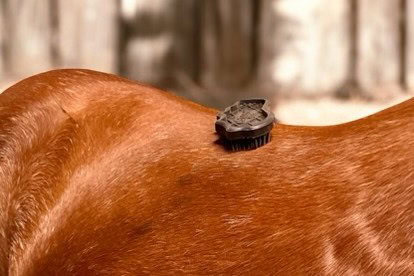
Traditionally made of rubber with rounded teeth, it’s designed to be worked in small circles across the horse’s body. The pressure not only loosens dirt, dander, and shedding hair but also stimulates natural skin oils that keep the coat shiny. Newer silicone or glove-style curries provide more flexibility, making them easier for beginners to use.
It boosts circulation and can even help relax tense muscles after turnout or training. Because of the circular motion, many horses lean into the pressure like a massage. Sensitive horses often tolerate a grooming mitt better than a traditional curry, and mitts double as bath scrubbers.
2. Dandy / Hard Brush
A dandy/stiff brush, has long, firm bristles designed to whisk away the debris you’ve loosened with the curry comb. It’s most effective when used in short, snappy strokes that follow the direction of the coat. This tool is especially valuable for knocking off dried mud or arena dust after turnout.
Because of its stiffness, the dandy brush should only be used on the body—never on the face or legs, where skin is thinner and more sensitive.
3. Body / Medium Brush
The body brush bridges the gap between the stiff dandy brush and the soft finishing brush. With medium-density bristles, it removes fine dirt and adds polish without irritating the skin. It’s safe for most of the body, including shoulders and hindquarters, and is often the brush riders reach for in day-to-day routines.
Using a slightly damp cloth in tandem with the brush can trap fine particles, leaving the coat gleaming. Horses with thin coats often prefer a body brush over a dandy brush. Use long, sweeping strokes for the best effect.
4. Soft / Finishing Brush
With ultra-soft bristles, it smooths out the coat after currying and brushing while removing lingering dust. Smaller versions, known as face brushes, are designed specifically for delicate areas like the eyes, muzzle, and legs.
Many riders finish with a light grooming spray before a soft-brush pass, which enhances the coat’s glow for photos or shows.
5. Mane & Tail Comb / Brush
Manes and tails need special attention to prevent breakage. Wide-tooth combs, paddle brushes, and even human-style detangling brushes can all work, but the key is to start from the bottom and work upward in small sections. Using fingers before a comb reduces stress on the hair.
When paired with a good detangler, brushing can be fast and painless. Long, silky tails in particular need regular care to avoid knots and burrs that can cause horses discomfort.
6. Detangler / Coat Conditioner
A leave-in detangler or conditioner is essential for mane and tail care. Products like ShowSheen, Mane ‘n Tail, or Cowboy Magic create slip that reduces hair breakage and prevents knots. Some formulas also repel dust, keeping tails cleaner for longer.
A light mist is better than saturating the hair. Applying too much can make tails sticky or attract dirt.
7. Hoof Pick
It’s used to remove packed dirt, rocks, and manure from the sole and frog, preventing painful bruises and conditions like thrush. A built-in brush makes quick work of fine debris, leaving hooves inspection-ready.
It’s used to remove packed dirt, rocks, and manure from the sole and frog, preventing painful bruises and conditions like thrush. A built-in brush makes quick work of fine debris, leaving hooves clean and comfortable. In muddy environments, cleaning out the hooves twice a day is ideal.
8. Shedding Blade
Changing seasons lead to changes in the horses coat, and that’s where the shedding blade shines. This serrated tool strips away loose winter hair in minutes. It can also double as a scraper for dried mud during rainy seasons.
Shedding blades should be used gently, as overuse can irritate the skin. Sensitive horses may prefer alternatives like the SleekEZ or grooming knives, which remove hair without scratching. You can also flip the blade over to the smooth side to use it as a sweat scraper in a pinch.
9. Sweat Scraper
After a bath or a heavy workout, horses can take a long time to dry. A sweat scraper speeds things up by removing excess water or sweat before it soaks back into the coat. Rubber scrapers conform to the horse’s body, while metal scrapers provide durability.
By removing surface water, you prevent chills and cut down drying time, which is especially useful during cooler months. Follow up with a towel on legs and sensitive areas.
10. Sponges & Towels
Every grooming tote should have at least two sponges: one for the face and one for the dock/tail area. Color-coding or labeling prevents cross-contamination. Towels are equally valuable for wiping down sweaty marks, cleaning tack, or drying legs and sensitive areas.
Sponges are also indispensable for applying medicated shampoos or rinsing sweat from hard-to-reach places. Unlike brushes, they won’t irritate delicate skin around the muzzle or eyes.
11. Fly Spray (Seasonal)
Flies, gnats, and mosquitoes are more than just a nuisance—they can cause skin irritation, stress, and even infections if bites are scratched open. Fly sprays are seasonal essentials that keep horses comfortable and focused. Pair with a healing balm to keep minor wounds clean and free of insects.
Most sprays are applied over the body, but for sensitive areas, applying the product to a cloth and wiping it on works better. Natural sprays are growing in popularity, while heavy-duty repellents are still showground favorites.
12. Clippers / Trimmers (Optional)
Clippers and trimmers aren’t everyday essentials, but they’re indispensable for show prep and hygiene. Trimmers keep bridle paths neat, fetlocks tidy, and muzzles clipped. Full-size clippers handle body clipping for thick winter coats.
Noise-sensitive horses may need slow desensitization to clippers. Cordless options are quieter and easier to maneuver around tricky spots. Regular blade oiling and cleaning will extend the life of your investment.
13. Grooming Tote / Organizer
A tote helps protect your investment. Brushes stay cleaner when stored properly, bottles of detangler or fly spray are less likely to leak onto tack, and small essentials like hoof picks are always within reach. Wall and door organizers are also popular for saving floor space in tack rooms and keeping items visible.
For riders who move between home, shows, and lessons, portability matters just as much as organization. Larger barns often use sturdy trunks, while individual horse owners may prefer lightweight totes that are easy to carry in one hand.
Quick Grooming Routine Suggestion
- Curry comb in circles to loosen dirt and hair.
- Dandy/Stiff brush to flick away debris.
- Body brush to polish and smooth.
- Soft brush on face and legs.
- Comb mane/tail with detangler.
- Pick hooves thoroughly.
- Wipe face/dock with sponge or towel.
- Finish with fly spray or coat conditioner.
Troubleshooting & Pro Tips
- Thrush prevention: Hoof picking twice daily in muddy weather is a lifesaver.
- Sensitive horses: Swap stiffer brushes for rubber mitts or softer bristles.
- Shedding: Start with a curry, then switch to a shedding blade during spring coat changes.
- Brush care: Clean brushes by knocking them out on a metal curry and washing them weekly.
FAQs
What should be in a basic grooming kit?
Curry comb, brushes (hard, medium, soft), mane/tail tool, hoof pick, sweat scraper, sponges/towels, fly spray, tote.
How often should I groom?
Ideally daily, or at least before and after every ride.
Can I use a metal curry on my horse’s legs?
No—only use rubber curries on sensitive areas.
Do I need hoof oil?
Only if hooves are brittle or dry; consult your farrier.
What’s the best tool for shedding season?
A shedding blade or grooming knife paired with a rubber curry.
Sources and Additional Reading