

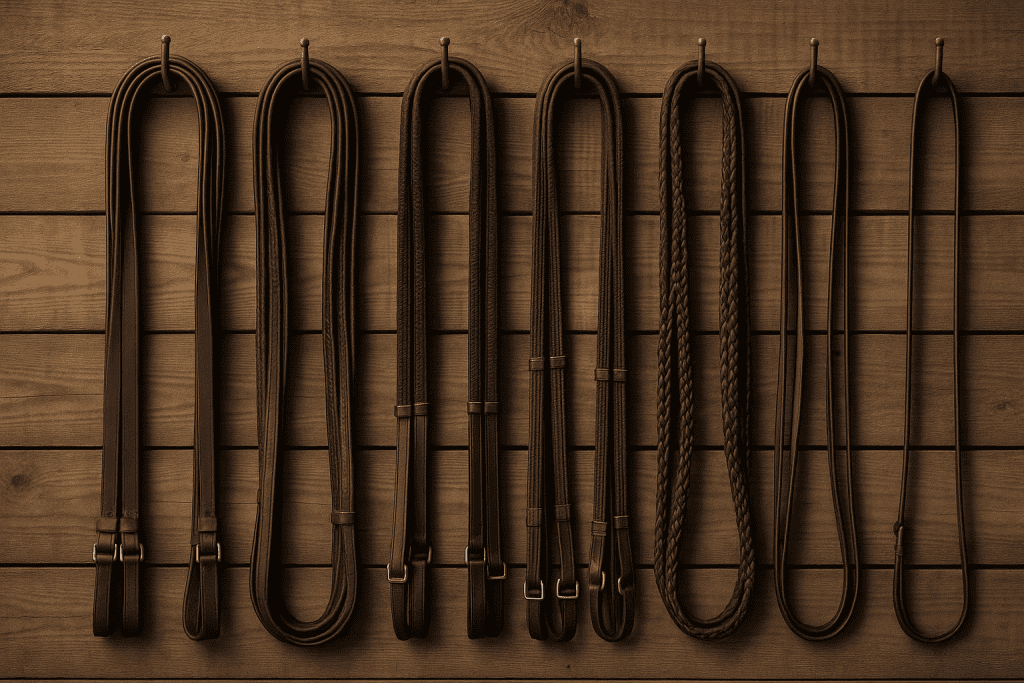
What You Need to Know
- Rein construction changes grip, bulk, flexibility, and feel in the hand; there is no single rein type that is best for every rider or discipline.
- Laced leather is traditional in the hunter ring, while rubber and rubber-lined reins are commonly chosen when extra grip is useful. Plain leather remains a traditional option, including for curb reins used with double bridles.
- Rein size labels vary by manufacturer. Check the actual listed length and width rather than relying only on labels such as pony, cob, full, or oversize.
- Competition rules and turnout conventions can differ by discipline and may change over time. Check the current rules for your organization before buying reins specifically for showing.
- Inspect reins regularly for damaged stitching, loose lacing, worn rubber, cracked leather, weakened webbing, or compromised hardware. Reins are safety equipment, not just a cosmetic part of the bridle.
The differences begin with how each rein is constructed—and what that means for the rider holding it.
What Actually Changes from One Rein to Another?
Before comparing individual rein styles, it helps to understand what actually changes between them. Material and construction influence how a rein feels in the hand, but width, length, grip, and flexibility can matter just as much as whether it is made from leather, rubber, or webbing.
- Grip: Smooth leather, lacing, rubber, and textured webbing provide different surfaces to hold. Grip can also change with moisture, gloves, and wear.
- Bulk: Width, thickness, and added grip materials determine how much rein sits in the hand. A thicker rein is not automatically more secure or comfortable.
- Flexibility: Leather quality, rein construction, rubber coatings, and webbing affect how readily a rein bends and conforms to the hand.
- Length: Reins need to accommodate the horse’s size, neck movement, and intended use without leaving an impractical amount of excess material.
- Width: Narrow and wide reins can feel substantially different, even when made from the same material. Consider hand size and whether you will be holding one or two pairs of reins.
- Discipline and competition requirements: Riding traditions influence rein selection, but permitted equipment varies between organizations, divisions, and classes. Consult the applicable rulebook when choosing competition tack.
| Rein type | Construction and feel | Practical Considerations |
|---|---|---|
| Plain leather | Smooth leather without added grip material | Traditional appearance, relatively low bulk; traction depends on finish and conditions. |
| Laced leather | Leather with lacing that creates a textured surface | Traditional hunter styling; inspect lacing for looseness and wear. |
| Rubber / rubber-lined | Rubber grip surface on a leather or synthetic foundation | Additional traction; compare thickness, grip texture, and flexibility. |
| Webbed / web-rubber | Woven textile, sometimes incorporating rubber threads or hand stops | Textured grip and varied constructions; care requirements depend on materials. |
| Braided leather | Leather strands braided to create surface texture | Traditional leather appearance and textured feel; construction varies. |
| Curb reins | A second pair attached to an appropriate curb bit | Often narrower to reduce bulk when holding two reins; use depends on the bit configuration. |
Plain (Flat) Leather Reins
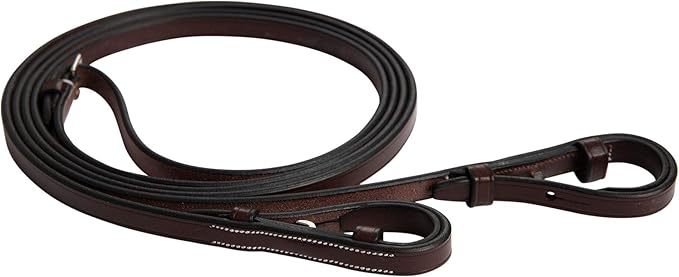
Plain leather reins have a smooth surface without added lacing, rubber, or webbing. Their relatively simple construction offers a traditional appearance and can reduce bulk compared with heavily textured or rubber-covered alternatives. The feel varies with leather thickness, finish, and suppleness.
Because their surface is smooth, plain leather reins generally offer less texture to grip than laced or rubber-covered alternatives. Some riders prefer this uncluttered feel, particularly for flatwork or formal turnout. Narrow plain leather reins are also commonly used as curb reins with double bridles, helping riders distinguish and manage two pairs of reins.
Consider plain leather if…
You prefer a smooth, traditional rein with relatively little bulk, primarily ride in conditions where additional grip is not a priority, or need a narrow second rein for an appropriate double-bridle setup.
Laced Leather Reins
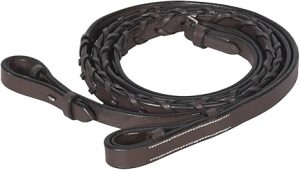
Laced leather reins have a section of leather lacing woven through the rein to create a textured gripping surface. They retain the traditional appearance of leather while providing additional texture where the rider holds them. The width, lacing pattern, and quality of the leather affect how substantial they feel in the hand.
Laced reins are closely associated with hunter and equitation tack, where their traditional appearance is often preferred. Riders may appreciate the added texture without the thickness of some rubber-grip designs. However, the lacing creates additional areas where dirt can accumulate and wear can develop. Check for loose or broken lacing and damaged stitching during routine inspections.
Consider laced reins if…
You prefer traditional hunter-style tack, want more surface texture than smooth leather provides, and are comfortable inspecting and maintaining the lacing as part of your regular tack-care routine.
Rubber-Grip and Rubber-Lined Reins
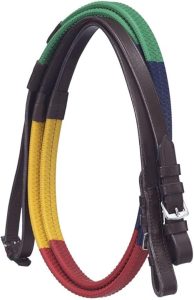
Rubber-grip reins incorporate rubber or a rubber-like material to create a textured gripping surface. Some use a substantial rubber covering over a leather or synthetic core, while others use a thinner rubber lining on the inside of a leather rein. The amount of grip, overall thickness, flexibility, and texture vary considerably between designs.
Rubber-grip reins are commonly used for jumping, eventing, and everyday schooling, particularly when additional traction is useful in wet conditions or with sweaty hands. A thicker rubber-covered rein may provide a substantial gripping surface, while a rubber-lined leather rein can offer additional traction with a less bulky profile. Neither construction guarantees better control; the rider still needs appropriate rein handling and a suitable fit.
Consider rubber-grip reins if…
You want additional grip for jumping, cross-country, or everyday riding; frequently ride in wet conditions; or prefer a textured surface. Compare full rubber and rubber-lined designs for thickness, flexibility, and comfort with your usual riding gloves.
Webbed and Web-Rubber Reins
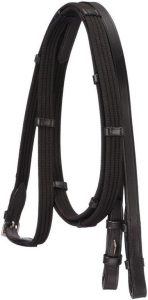
Webbed reins use woven textile material, often paired with leather attachment ends. Depending on the design, the webbing may be cotton, synthetic fiber, or a blend. Some versions incorporate rubber threads into the weave for additional grip, while others feature leather hand stops positioned along the reins.
Webbed reins offer a textured alternative to smooth leather and are available in a range of widths, thicknesses, and grip configurations. They are commonly used for schooling and general riding, although suitability for competition depends on the applicable rules. Hand stops can provide reference points for hand position, but their spacing and thickness vary between designs.
Consider webbed and web-rubber reins if…
You want a textured rein for everyday riding, prefer the feel of woven material, or find hand stops useful for maintaining a consistent hand position. Compare the webbing, stop placement, rein width, and attachment construction before choosing a pair.
Braided Leather Reins
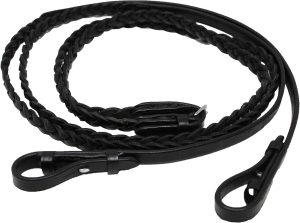
Braided leather reins use interwoven leather strands to create a textured surface. Some designs are braided along much of their length, while others incorporate braided sections into an otherwise flat leather rein. Their thickness, flexibility, and grip depend on the leather, braid pattern, and underlying construction.
Braided reins offer an alternative for riders who prefer leather but want more surface texture than a smooth rein provides. They may appeal to riders looking for traditional styling or a distinctive feel during everyday riding. Because construction varies, compare the thickness, flexibility, and attachment points rather than assuming every braided rein will handle the same way. Check the braid regularly for loose strands, stretching, or damage.
Consider braided leather reins if…
You prefer the appearance and feel of leather but want a textured gripping surface without a rubber covering. Examine the braid construction, overall thickness, and attachment hardware, and make sure the reins feel comfortable with your usual riding gloves.
Curb Reins and Double Bridles
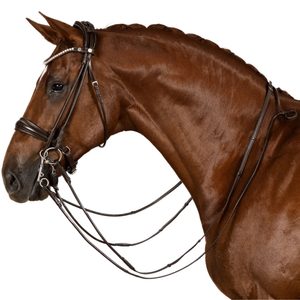
Unlike the other rein types in this guide, a curb rein is defined by its function rather than its material. A double bridle uses two bits and two pairs of reins: the bradoon, a small snaffle bit, and the Weymouth curb bit. One pair of reins attaches to the bradoon, while the curb reins attach to the lower rein rings of the Weymouth. Curb reins are commonly narrower than the bradoon reins, helping the rider distinguish and organize both pairs in the hands.
The Weymouth operates through leverage, with its action influenced by factors including shank length, mouthpiece design, curb-chain adjustment, and rein use. This differs from the direct rein action of the bradoon. Double bridles require appropriate fitting and an understanding of how the two bits and rein pairs interact. They are associated with advanced dressage and certain other disciplines, although their permitted use varies by competition organization and class.
Consider curb reins if…
You use an appropriately fitted double bridle or another bit configuration designed for separate curb reins and have the knowledge or qualified instruction needed to use it correctly. Choose a suitable length and width, make sure you can distinguish the two rein pairs comfortably, and inspect both sets of attachments before riding.
Hand Stops vs. Rein Stops: What’s the Difference?
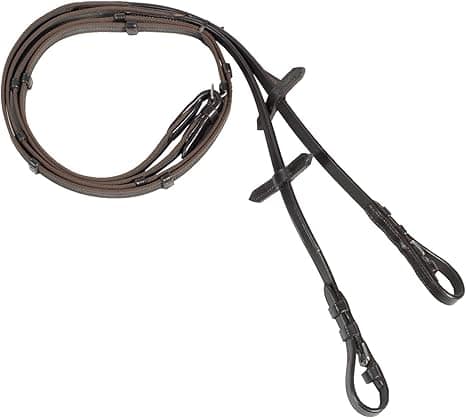
These terms sound similar, but they describe different features. Hand stops help the rider identify positions along the reins, while rein stops are associated with attachments such as a running martingale. Understanding the distinction matters when comparing rein designs and choosing compatible equipment.
Hand Stops
Hand stops are raised sections, often made from leather, attached at intervals along a rein. They give the rider tactile reference points for hand placement and can provide additional grip. Their size, spacing, and placement vary between manufacturers.
Rein Stops
Rein stops are small leather, rubber, or synthetic fittings positioned on the reins, commonly between the bit and the rings of a running martingale. They help prevent the martingale rings from sliding down toward and interfering with the rein attachments or bit rings. Their placement and compatibility should follow the equipment manufacturer’s instructions.
Remember: Hand stops are for the rider’s hands. Rein stops are protective fittings associated with certain auxiliary equipment. One does not replace the other.
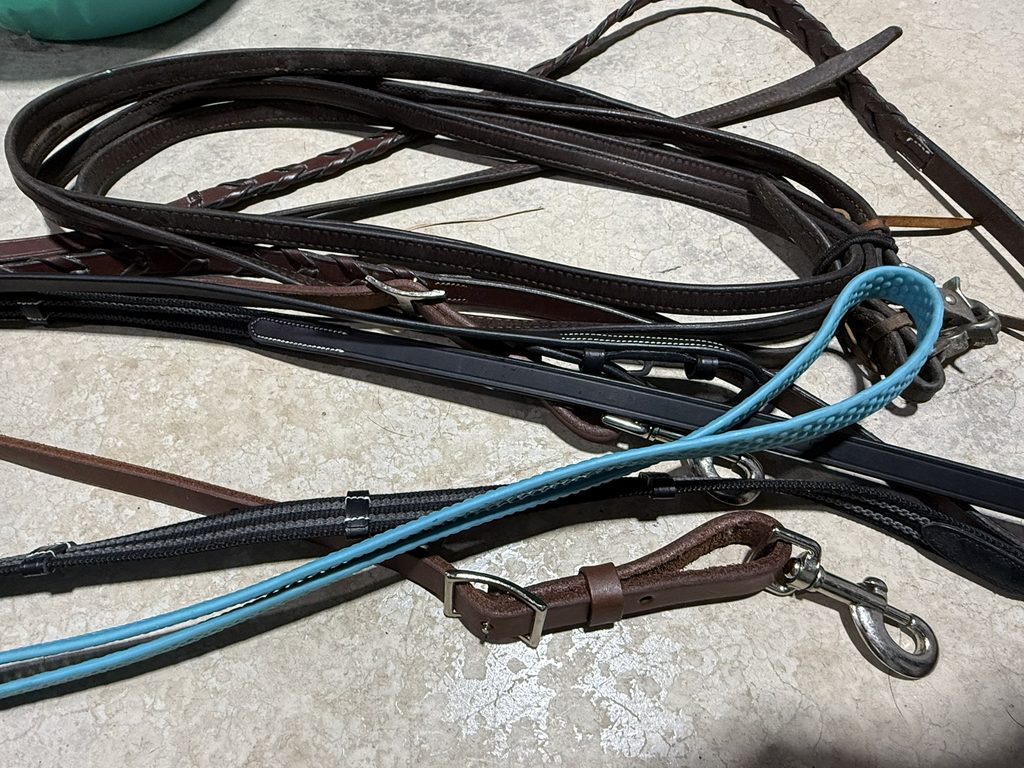
English Rein Lengths and Sizing
Rein sizing is not fully standardized across brands, so listed sizes should be treated as starting points rather than guarantees. Length, width, attachment style, and intended use all affect whether a pair of reins will feel appropriate in the hand and suit the horse, rider, and discipline.
| Listed Length | Often Labeled As | Common Use | What to Confirm |
|---|---|---|---|
| 48″ | Pony | Smaller ponies or riders wanting a shorter rein | Check whether the measurement reflects the full rein length and whether the width is appropriate for the rider’s hand |
| 52″ | Cob | Small horses, large ponies, or compact builds | Compare the brand’s sizing notes and the horse’s neck length rather than relying on the size label alone |
| 54″ | Full | Average horse size; a common general-purpose English rein length | Confirm whether the rein will provide the desired contact length for your discipline and riding style |
| 60″ | Oversize or Warmblood | Larger-framed horses or riders needing more length | Make sure the extra length does not leave an impractical amount of excess rein |
| Varies by maker | N/A | Specialty reins, double-bridle reins, or discipline-specific designs | Check the product listing for exact length, width, stops, attachments, and whether the reins are intended for snaffle or curb use |
How to Choose the Right Length
The right reins must accommodate the horse’s neck movement while remaining comfortable for the rider to hold and adjust. When comparing products, look beyond the size label and check these four details.
01 – Measure
Measure your current reins
If you already have reins that fit well, measure them and compare the result with the manufacturer’s stated measurement method. Confirm whether the listing gives the length of each side or the complete rein.
02 – Check width
Check width and thickness
Compare the rein’s width and bulk, especially if you have smaller hands, wear gloves, or hold two pairs of reins with a double bridle.
03 – Inspect features
Compare construction
Check the attachment style, hand-stop placement, grip material, and hardware. These details can affect how the reins feel even when their listed lengths are identical.
04 – Confirm the setup
Match the horse and bridle
Consider the horse’s neck length, the riding activity, and the bridle configuration. For double bridles, confirm that the reins are suitable for their intended curb or bradoon role.
Remember: Rein size labels are not standardized. Compare actual measurements, rein width, and construction before purchasing.
Maintenance and Care: Keeping English Reins Safe
Reins collect sweat, dirt, moisture, and residue from regular handling. Cleaning helps preserve their appearance and condition, but inspection is equally important. Before each ride, check the areas that experience the most wear, then choose a cleaning method appropriate for the rein’s materials and the manufacturer’s instructions.
Before Every Ride: Inspect Your Reins
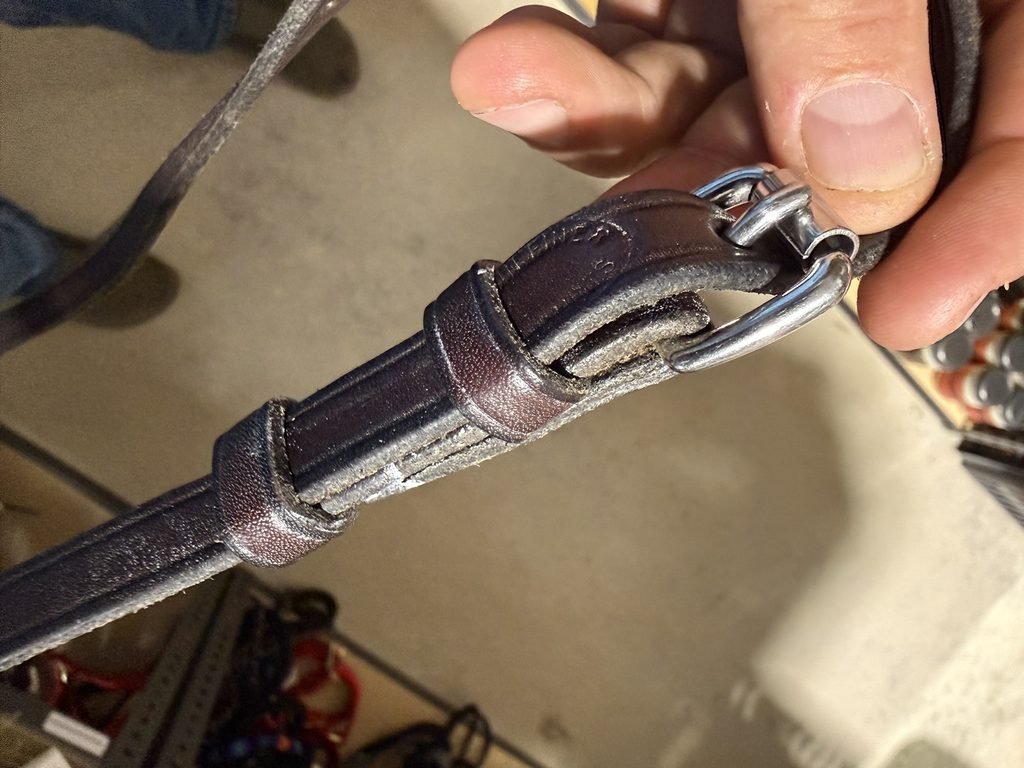
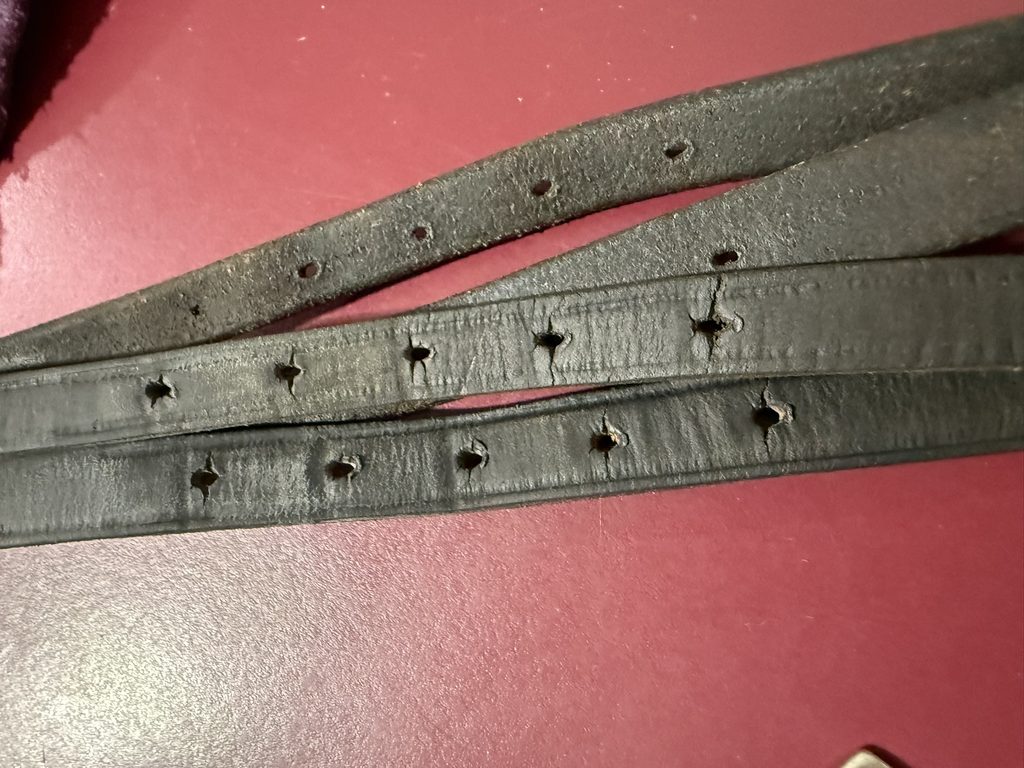
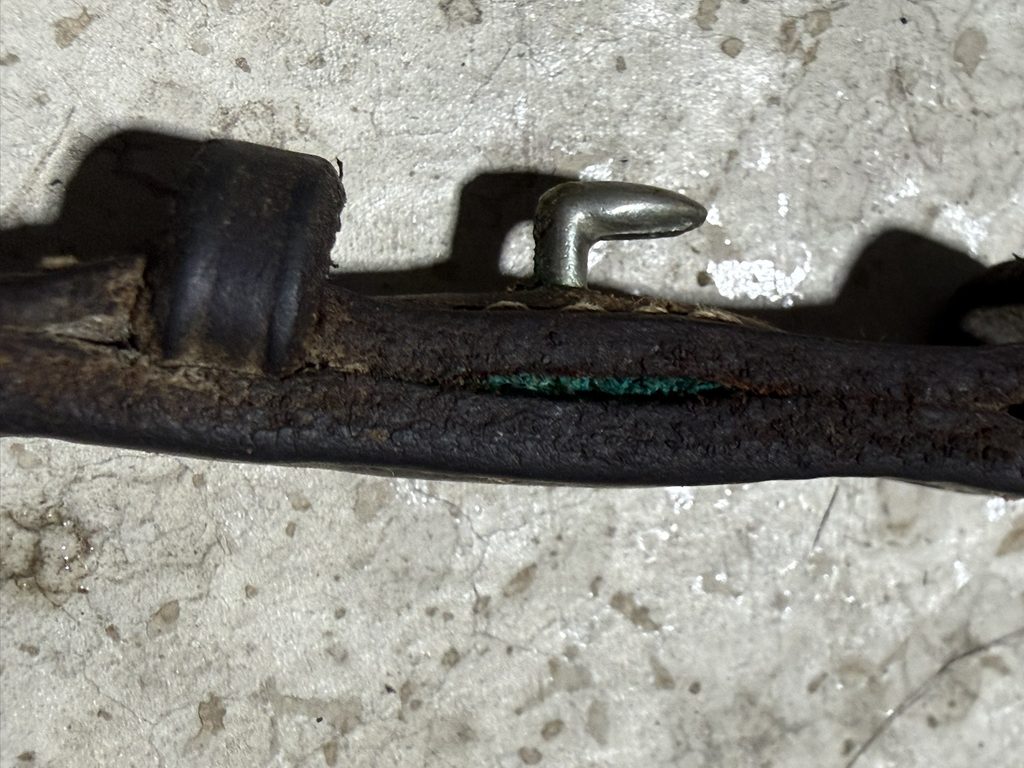
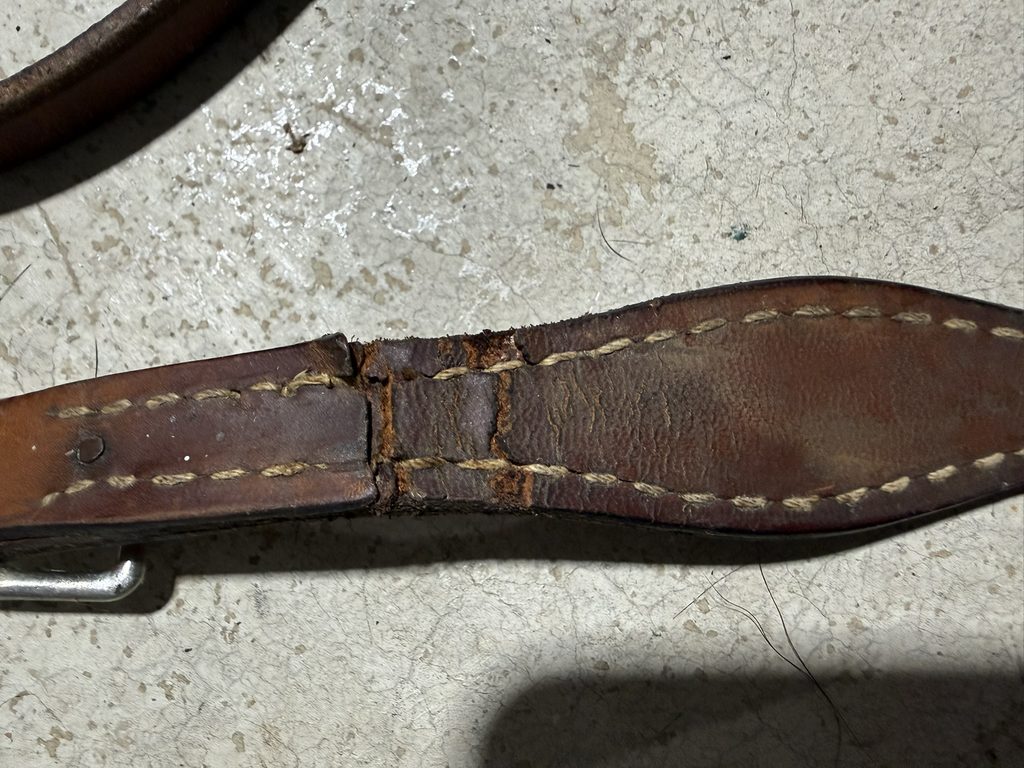
Run your eyes and hands along both reins, paying particular attention to these areas:
- Attachment points: Check billets, buckles, hooks, stitching, and other fasteners for looseness or damage.
- Leather: Look for cracks, deep wear, tearing, excessive stretching, or weakened areas around holes and folds.
- Lacing and braiding: Check for loose strands, broken lacing, or separating construction.
- Rubber and webbing: Look for worn grips, splitting, fraying, damaged stitching, or deteriorating material.
- Stops and hardware: Make sure hand stops and rein stops are secure and that any necessary fittings are correctly positioned.
If a rein shows structural damage or has a questionable attachment, do not ride with it until it has been properly evaluated and repaired or replaced. Cleaning and conditioning cannot restore compromised structural strength.
Cleaning and Conditioning Leather Reins
Leather reins generally benefit from regular removal of surface dirt and sweat, followed by appropriate cleaning and occasional conditioning. Use products recommended for the leather’s finish and construction, and avoid over-saturating the material.
- Wipe the reins with a slightly damp, soft cloth to remove surface dirt and sweat.
- When additional cleaning is needed, use a leather cleaner suitable for the material, following its directions.
- Remove any remaining cleaner as directed and allow the leather to dry naturally.
- If conditioning is appropriate, apply a small amount of compatible conditioner according to the manufacturer’s instructions.
- Store the reins in a clean, dry, ventilated location away from direct heat and prolonged sunlight.
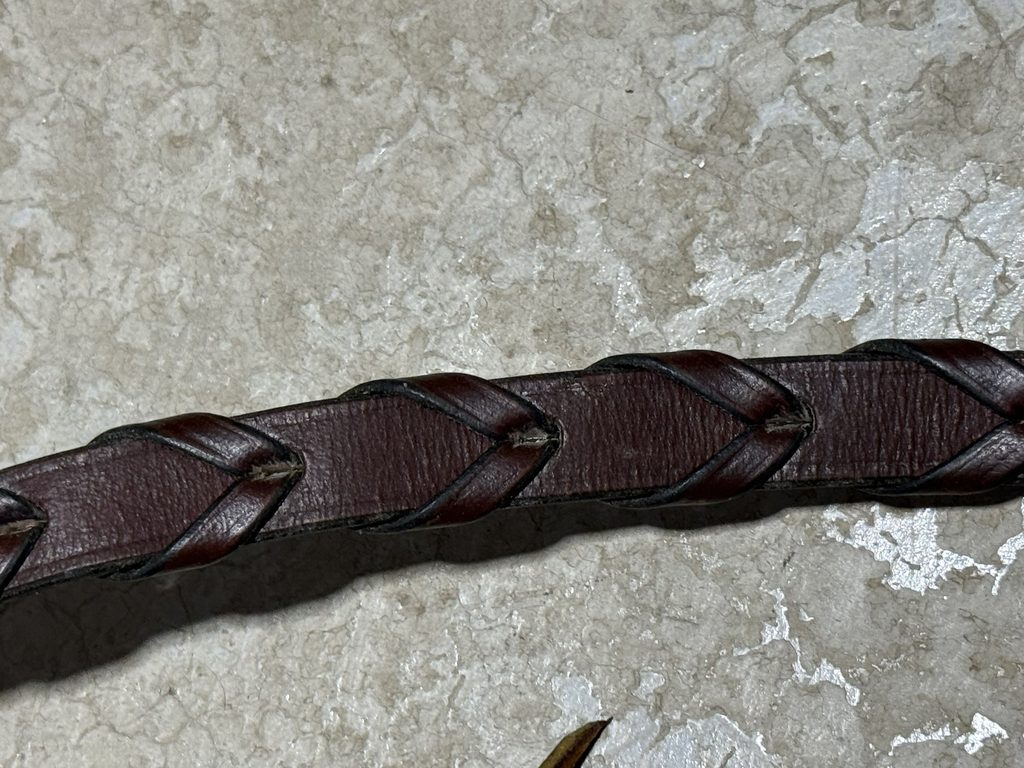
For laced or braided reins: Use a soft brush to remove dirt from the textured areas without pulling on the lacing or braid. Inspect those areas carefully because damage can be harder to see between the strands.
Rubber and Rubber-Lined Reins
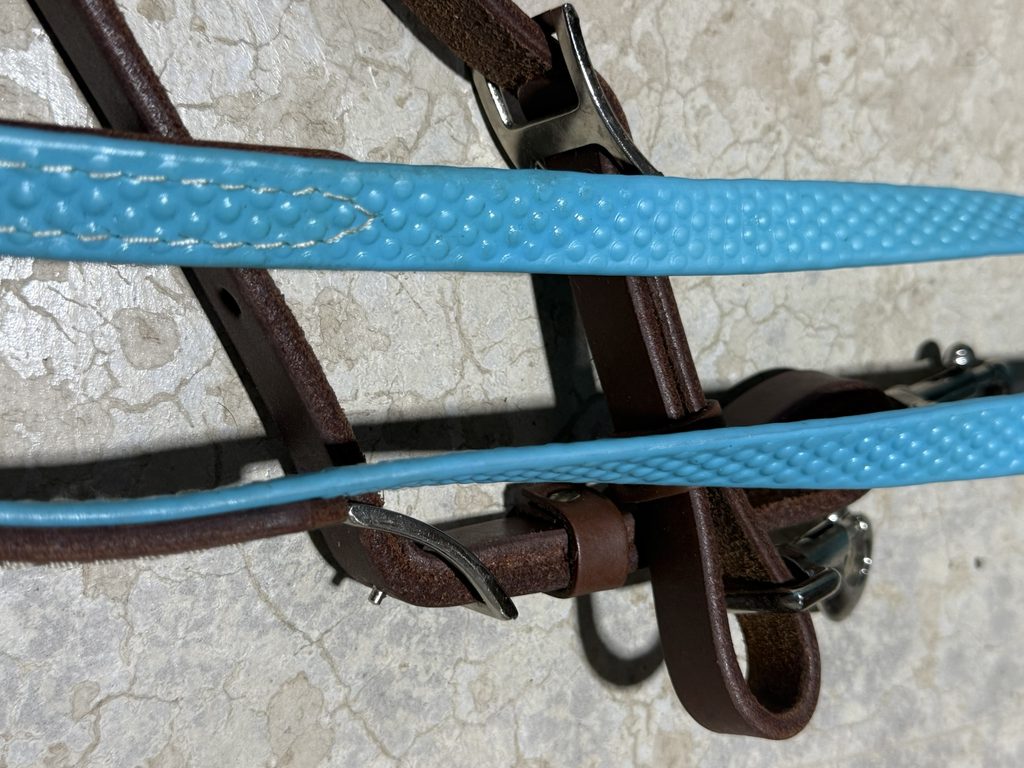
Rubber grip surfaces can collect dirt, sweat, and residue from grooming products. Some cleaning chemicals and leather conditioners may be unsuitable for rubber or synthetic grip materials, so check the manufacturer’s care instructions before applying products.
- Wipe away loose dirt and sweat with a damp cloth.
- If permitted by the manufacturer, clean the rubber grip gently with water and a mild cleaning product.
- Remove cleaning residue and allow the reins to dry naturally.
- Clean leather attachment ends separately using an appropriate leather-care product.
- Inspect the grip for splitting, excessive wear, separation from its backing, or unusual stickiness.
Webbed and Web-Rubber Reins
Woven reins can trap dirt and sweat between their fibers, particularly around hand stops and attachment points. Cleaning methods depend on whether the webbing is cotton, synthetic, rubber-woven, or combined with leather.
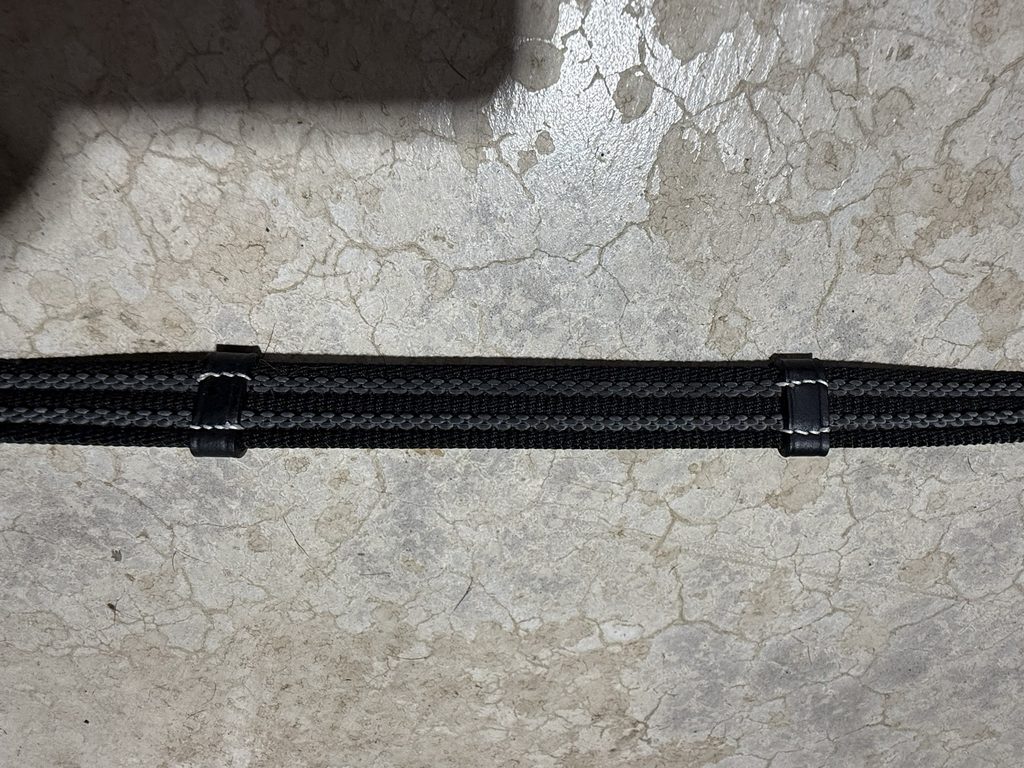
- Brush away loose dirt with a soft brush.
- Follow the manufacturer’s instructions for cleaning the woven material, using water and a suitable mild cleaner only when permitted.
- Avoid soaking leather attachment ends or other components that are not intended for immersion.
- Allow the reins to dry completely in a ventilated area away from direct heat.
- Check the webbing for fraying, weakened fibers, damaged stitching, and deterioration around the hand stops.
| Material | Routine care | Watch for |
|---|---|---|
| Leather | Wipe clean; use compatible cleaner and conditioner when needed | Cracking, stretching, damaged stitching, weakened holes |
| Rubber / rubber-lined | Clean grip according to manufacturer instructions; treat leather ends separately | Splitting, grip separation, excessive wear, unusual stickiness |
| Webbed / web-rubber | Remove dirt; clean according to material instructions; dry thoroughly | Fraying, damaged stitching, weakened fibers, loose stops |
TackReview Take
There is no universally “best” English rein.
Smooth leather keeps bulk low and preserves a traditional feel; lacing, rubber, webbing, and braiding add different kinds of texture and grip.
The useful comparison is not simply which material is considered correct for a discipline, but whether the rein’s width, thickness, length, flexibility, and grip suit the horse, rider, conditions, and intended use.
Start with fit and function, then consider tradition and appearance.
For competition equipment, verify the current rules for the organization and class in which you ride.
Riders comparing rein systems may also want to read our guide to Western reins and their different constructions and uses.
Sources & Further Reading
TackReview uses manufacturer documentation, governing-body rules, and established equestrian references to verify technical details and provide additional context. Competition rules and product specifications can change; consult the current source when making competition or purchasing decisions.
- Riding Warehouse — Types of English Reins & How to Measure — Current overview of rein construction, sizing conventions, widths, curb reins, and the lack of standardized pony/cob/full/oversize lengths.
- Dover Saddlery — Reins for English Riding Disciplines — Practical reference for laced, rubber, plain, webbed, and other rein styles and their traditional uses across English disciplines.
- US Equestrian — Dressage Rules & Equipment — Current USEF dressage rules, equipment annexes, rule changes, and links to FEI requirements. Use this rather than relying on older summaries when checking competition legality.
- Farnam — Cleaning Tack: Best Practices for Looking Good and Staying Safe — General leather-tack cleaning, conditioning, inspection, and care guidance.
Shop English reins from Spotted M Tack
Spotted M Tack carries a rotating selection of new, used, and consignment English reins, including leather, rubber-grip, and webbed styles. Inventory changes frequently.