

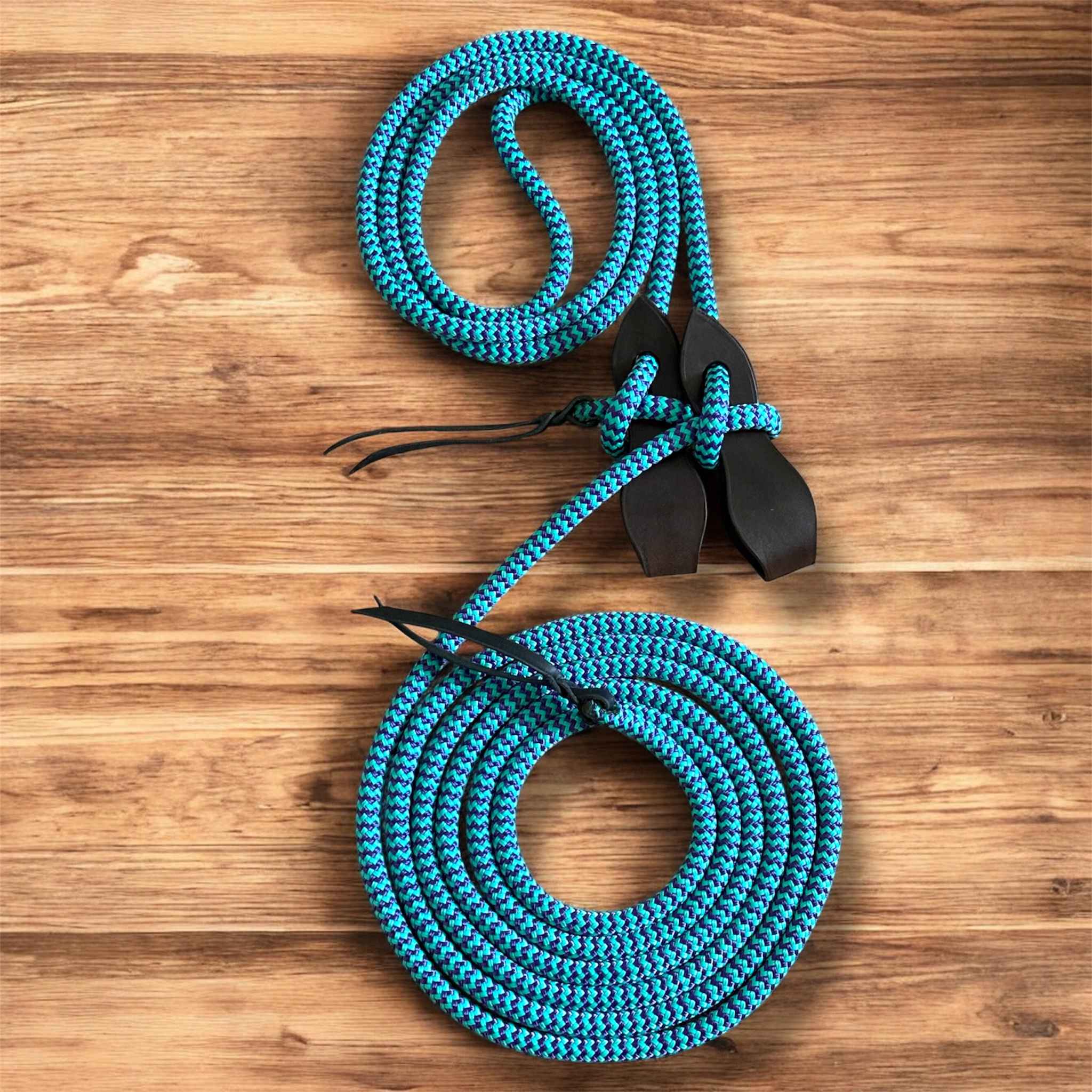
Western reins aren’t one-size-fits-all. The reins you choose affect how clearly you communicate with your horse, whether you ride one-handed or two-handed, and how secure your grip feels. Weight, length, and construction all influence how signals travel from your hand to the bit or bosal.
From everyday ranch riding to the show pen, Western riders rely on four main rein styles: split reins, romal reins, mecate reins, and closed-loop roping or contest reins. Each serves a specific purpose, and understanding those differences helps you choose tack that works with your riding—not against it.
Disclosure: This article contains affiliate links. If you click through and make a purchase, we may earn a commission at no extra cost to you. Some links also go to Spotted M Tack, our family-owned tack store, where we may earn profit directly from sales. We only recommend products we use ourselves or trust for horse care.
Types of Western Reins
Split Reins
Split reins are two separate straps, traditionally leather, attached individually to the bit. They are the most common and versatile Western rein style.
How they’re used
Used across ranch riding, training, trail riding, and many Western show disciplines, split reins are especially popular with riders transitioning from two-handed to one-handed riding.
Why riders choose them
They offer excellent feel and flexibility, allow riders to drop one rein when opening gates, and adapt easily across disciplines. Proper rein management is important, as split reins can be dropped or tangled if handled incorrectly.
Romal Reins
Romal reins are closed reins with an attached extension, or “romal,” originating from the California vaquero tradition. They’re typically paired with spade or curb bits.
How they’re used
Designed specifically for one-handed riding, romal reins are most common in reined cow horse, Western pleasure, and breed shows where refined hand position is required.
Why riders choose them
Romal reins promote subtle, precise communication and a polished presentation. They are discipline-specific, however, and not intended for two-handed riding.
Mecate Reins
A mecate is a single long rope—traditionally horsehair—tied to a bosal or used with slobber straps on a snaffle. It also functions as a lead rope.
How they’re used
Common in colt starting, training programs, and natural horsemanship, mecates support two-handed riding while maintaining soft, consistent contact.
Why riders choose them
They offer excellent feel, versatility, and built-in functionality, though some riders find them bulky at first. Horsehair mecates require proper care to maintain their shape and responsiveness.
Roping, Contest & Barrel Reins
These reins form a single closed loop and are typically shorter and thicker, made from leather, nylon, or braided rope.
How they’re used
Designed for speed and security, they’re common in barrel racing, roping, and timed events.
Why riders choose them
They’re easy to grab, minimize excess rein, and provide a secure grip at speed, though they offer less refined feel than traditional split or romal reins.
Choosing the Right Western Reins
Start by matching your reins to your discipline: split reins for versatility, romal reins for refined one-handed riding, mecates for training and horsemanship, and closed-loop reins for speed events.
Material also matters. Leather provides classic feel and weight, rawhide offers stiff, precise communication, horsehair delivers soft responsiveness, and nylon or rope excels in durability and weather resistance.
Rein weight plays a key role in communication. Heavier reins drape naturally and signal with minimal movement, while lighter reins require more deliberate hand motion. Split reins and mecates can be used one- or two-handed, while romal reins are designed exclusively for one-handed riding.
Rein Features, Attachments & Grip Options
Beyond rein type, details like weight, attachments, and grip significantly affect feel, safety, and rider confidence.
Weighted Reins
Weighted reins—through thicker leather, rawhide, poppers, or weighted ends—help reins hang evenly and deliver clearer neck reining cues with less hand movement. They’re best suited for one-handed riding, finished horses, and disciplines emphasizing subtle communication, but may feel heavy for beginners or impractical for speed events.
Neck Ropes (Get-Down Ropes)
A neck rope is a loose loop worn around the horse’s neck, independent of the reins. Riders use them as a backup steering aid, to reinforce seat and leg cues, and during colt starting or confidence-building work. They’re often paired with split reins or mecates.
Rope & Paracord Reins
Rope and paracord reins are popular for everyday riding thanks to their durability, weather resistance, and excellent grip in wet or dusty conditions. While practical and affordable, they typically offer less refined feel and are not allowed in many breed or rated shows.
Rein Ends: Attachments & Terminations
Rein ends affect durability, noise, ease of tack changes, and overall feel.
Water loops thread directly through the bit rings, offering a quiet, traditional, and well-balanced connection ideal for show and ranch riding.
Slobber straps add weight, protect reins from saliva wear, and make bit changes easier—common in mecate and training setups.
Snaps provide maximum convenience for quick changes, making them practical for trail riding and lesson barns, though they add noise and metal near the bit.
Grip Styles: Finding the Right Feel
Grip style directly affects rider confidence and control.
Knots on rope reins create natural hand placement and prevent slipping, though they can feel bulky for smaller hands.
Braided grips over rope or leather add texture without extra thickness and are common on romal and traditional braided reins.
Rubber or synthetic grips provide maximum traction in wet conditions and are easy to clean.
Braided leather grips offer a refined look with balanced feel, requiring regular conditioning to stay supple.
Rein Handling & Safety
Maintain a consistent hand position above the horn, avoid wrapping reins around your hand, and practice safely dropping one rein when riding with split reins.
Keep excess rein clear of gates, saddle horns, and obstacles.
Care & Maintenance
Leather and rawhide should be cleaned regularly with saddle soap and conditioned lightly, avoiding over-oiling rawhide.
Rope and nylon reins can be washed with mild soap and air dried.
Horsehair mecates benefit from regular brushing and occasional hand washing with reshaping during drying.
Quick Comparison Chart
| Type | Construction | Grip | Best For | Typical Material |
|---|---|---|---|---|
| Split | Two loose straps | Medium | All-around | Leather |
| Romal | Closed + tail | High | Show / Cow horse | Rawhide, leather |
| Mecate | Single long rope | Moderate | Training | Horsehair, rope |
| Roping | Closed loop | High | Speed events | Nylon, leather |